
Affordable Land Investments: Why Malindi Blue at 149K Is a Strategic Entry Point
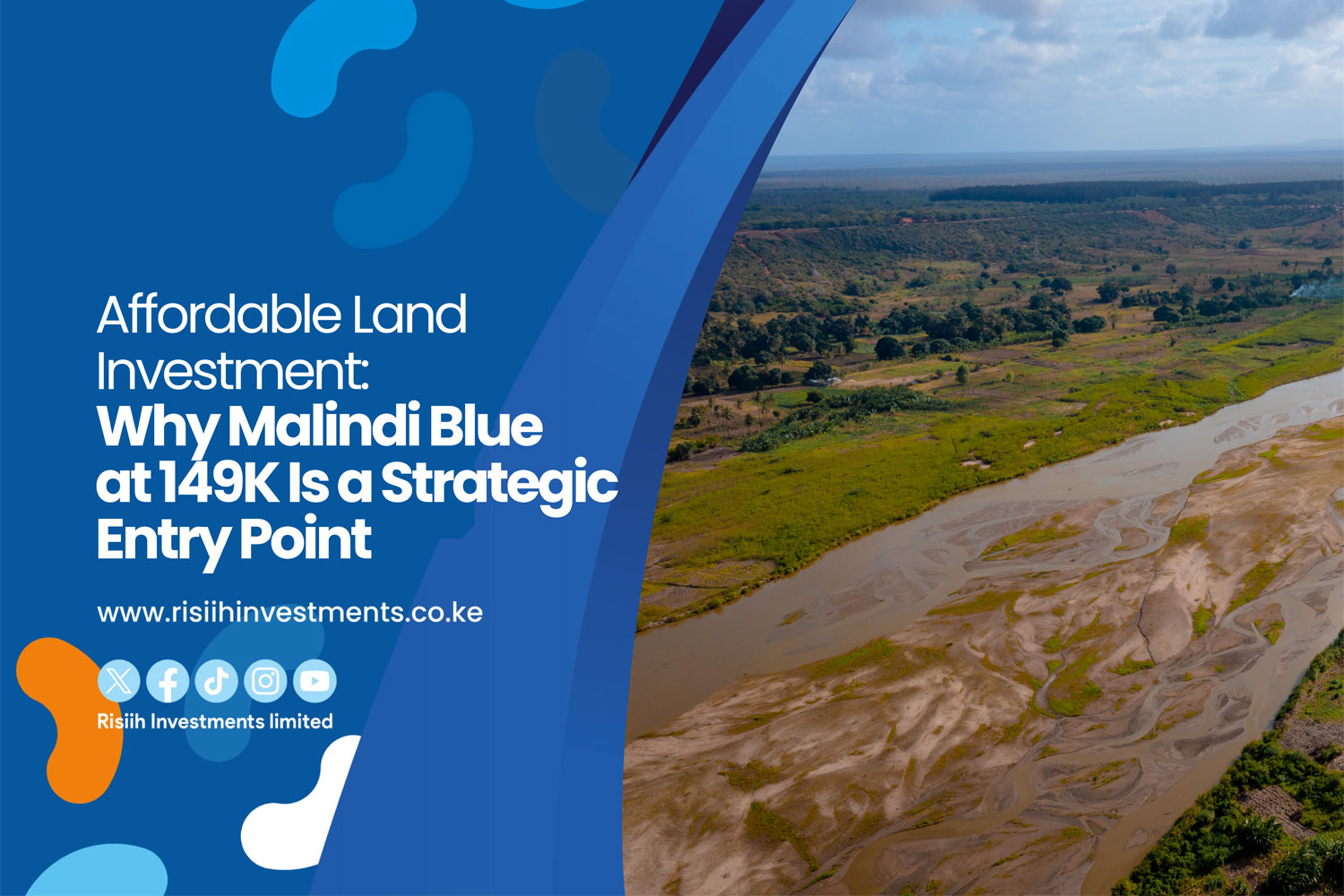
In land investing, affordability is often misunderstood. Many buyers assume that if land is inexpensive, it must be low quality, poorly located, or high risk. Seasoned investors know this is not always true. In many cases, affordable land represents an early-stage opportunity– a chance to enter a market before pricing reflects future demand.
At KES 149,000, Malindi Blue sits firmly in this conversation. The key question, however, is not why is it cheap? but rather what stage of the market am I entering, and what am I paying for at this point in time?
This article examines Malindi Blue from a due-diligence and investment perspective, unpacking the fundamentals behind the price and the long-term relevance of Malindi as a land investment location.
Why Malindi Remains Relevant to Long-Term Land Investors
To assess any Malindi land investment, it is important to separate short-term market noise from long-term fundamentals. Malindi’s story is not new, but it continues to evolve in ways that matter to patient investors.
A Brief Economic and Historical Context
Malindi has historically been known for:
- Tourism and hospitality
- Agriculture and fishing
- Cultural and historical significance along the Kenyan coast
While tourism shaped its early growth, Malindi has gradually diversified beyond seasonal demand. This shift is important for land investors, as diversified economies tend to offer more stable long-term land demand.
Key Growth Drivers in Malindi
Several trends continue to support Malindi’s relevance:
- Tourism and Lifestyle Migration
Malindi attracts both domestic and international lifestyle buyers seeking lower density living compared to Mombasa or Diani. - Agriculture and Food Security
Surrounding areas support farming, ranching, and agribusiness, creating sustained land use beyond tourism. - Renewable Energy Investment
The presence of large-scale projects such as solar energy plants has introduced new employment nodes and infrastructure interest. - Urban Cost Pressure Elsewhere
As land prices rise sharply in Nairobi and its satellite towns, investors increasingly look toward coastal and emerging regions for entry-level opportunities.
This context explains why many investors continue asking: Is Malindi a good place to invest in land? For long-term holders, Malindi remains structurally relevant.
Coastal Land Demand vs Inland Markets
Compared to inland growth towns, coastal markets like Malindi behave differently:
- Demand is influenced by lifestyle, agriculture, and retirement use
- Land absorption rates are steadier rather than speculative
- Entry prices can remain accessible longer due to land availability
This makes coastal locations particularly attractive for investors focused on capital preservation and gradual appreciation, rather than rapid flipping.
Understanding the Location of Malindi Blue
Location analysis goes beyond distance—it considers economic proximity, environmental value, and future usability.
Where Malindi Blue Is Situated
Malindi Blue is located in Pishi Mwenga, an area that reflects early-stage development characteristics:
- Approximately 30 minutes from Malindi Town
- Positioned away from congestion while remaining accessible
- Part of a broader zone with agricultural and renewable energy activity
Proximity to the Globeleq Solar Plant
Being about 4km from the Globeleq solar plant is more than a geographic detail. Large renewable energy projects often bring:
- Road improvements
- Employment opportunities
- Supporting services and settlements
While land near such projects does not appreciate overnight, it often benefits from gradual, infrastructure-led value creation.
Environmental and Lifestyle Considerations
The views of Mwenga Mountain add an environmental dimension that matters to:
- Lifestyle buyers
- Agricultural users
- Long-term residential planning
Environmental value is increasingly factored into land decisions, especially in coastal regions.
Breaking Down the 149K Price Point – What Investors Are Really Paying For
At KES 149,000, Malindi Blue is best understood as a strategic entry point, not a finished product.
Entry Affordability vs Long-Term Fundamentals
The price reflects:
- Early-stage location status
- Current infrastructure level
- Longer investment horizons
What it does not reflect is a lack of planning or usability. Instead, it offers access to land before full market maturity.
Why Early-Stage Locations Offer Asymmetric Potential
In land investing, downside risk is often capped by entry price, while upside unfolds over time through:
- Infrastructure rollout
- Population movement
- Land-use conversion
This asymmetry is why disciplined investors deliberately seek affordable entry points rather than fully priced markets.
Comparison to Fully Priced Coastal Plots
Fully developed coastal plots closer to town centres often:
- Require significantly higher capital
- Offer lower percentage growth potential
- Are already priced for existing demand
Malindi Blue sits earlier on the curve, which is precisely what makes it relevant for long-term planners.
Property Fundamentals That Matter to Investors
Affordable land must still meet baseline investment criteria. Malindi Blue addresses several fundamentals investors typically assess.
Key Property Attributes
- Well beaconed plots, reducing boundary and dispute risk
- Availability of water and electricity in the area
- Established access roads to the site
- Approximately 300 metres from the tarmac road, improving accessibility
Suitability for Farming and Long-Term Use
The land’s characteristics make it suitable for:
- Small-scale farming
- Holding for future development
- Multi-use planning depending on zoning evolution
Usability is a critical factor—land that can be actively used while being held often provides additional value beyond appreciation alone.
Investor Perspective: Risk, Holding Period, and Use Cases
Every land investment requires clarity on time horizon and risk tolerance.
Realistic Holding Periods for Malindi Land
Investors should approach Malindi with:
- Medium- to long-term holding expectations (5–10 years)
- Patience for infrastructure and market cycles
- A focus on fundamentals rather than speculation
Who This Investment Makes Sense For
Malindi Blue may be suitable for:
- First-time investors building land exposure gradually
- Young professionals seeking affordable asset ownership
- Diaspora investors prioritizing capital preservation
- Investors priced out of urban or peri-urban markets
Honest Risks to Consider
Balanced analysis requires acknowledging:
- Slower appreciation compared to speculative hotspots
- Dependence on broader infrastructure timelines
- The need for patience and long-term vision
These risks are not unique to Malindi—they are inherent in most early-stage land investments.
How Affordable Land Fits Into a Long-Term Wealth Strategy
Land has long played a role in wealth preservation in Kenya, particularly when acquired responsibly.
Land as a Capital Preservation Tool
Compared to highly leveraged or maintenance-heavy assets, land offers:
- Low holding costs
- Flexibility in exit timing
- Protection against inflation over long periods
Diversification for Investors Priced Out of Urban Markets
As cities become more expensive, affordable land allows investors to:
- Remain active in property markets
- Spread risk geographically
- Build assets incrementally
Why Disciplined Investors Enter Early
Experienced investors understand that:
- The best entry point is often before visible development
- Time in the market matters more than timing the market
- Research-driven decisions outperform emotional buying
Final Thoughts
Affordable land investments in Kenya are not about shortcuts—they are about strategy, patience, and clarity of purpose. At KES 149,000, Malindi Blue represents a calculated entry into a coastal market with enduring fundamentals, rather than a speculative bet.
For investors willing to think long-term, conduct proper research, and align purchases with broader financial goals, early-stage land can play a meaningful role in wealth building. At Risiih Investments, the focus remains on empowering individuals to make informed, confident decisions—grounded not in hype, but in understanding, timing, and vision.