
Land vs School Fees: Why Both Matter In Planning Your Child’s Future
 RI_admin
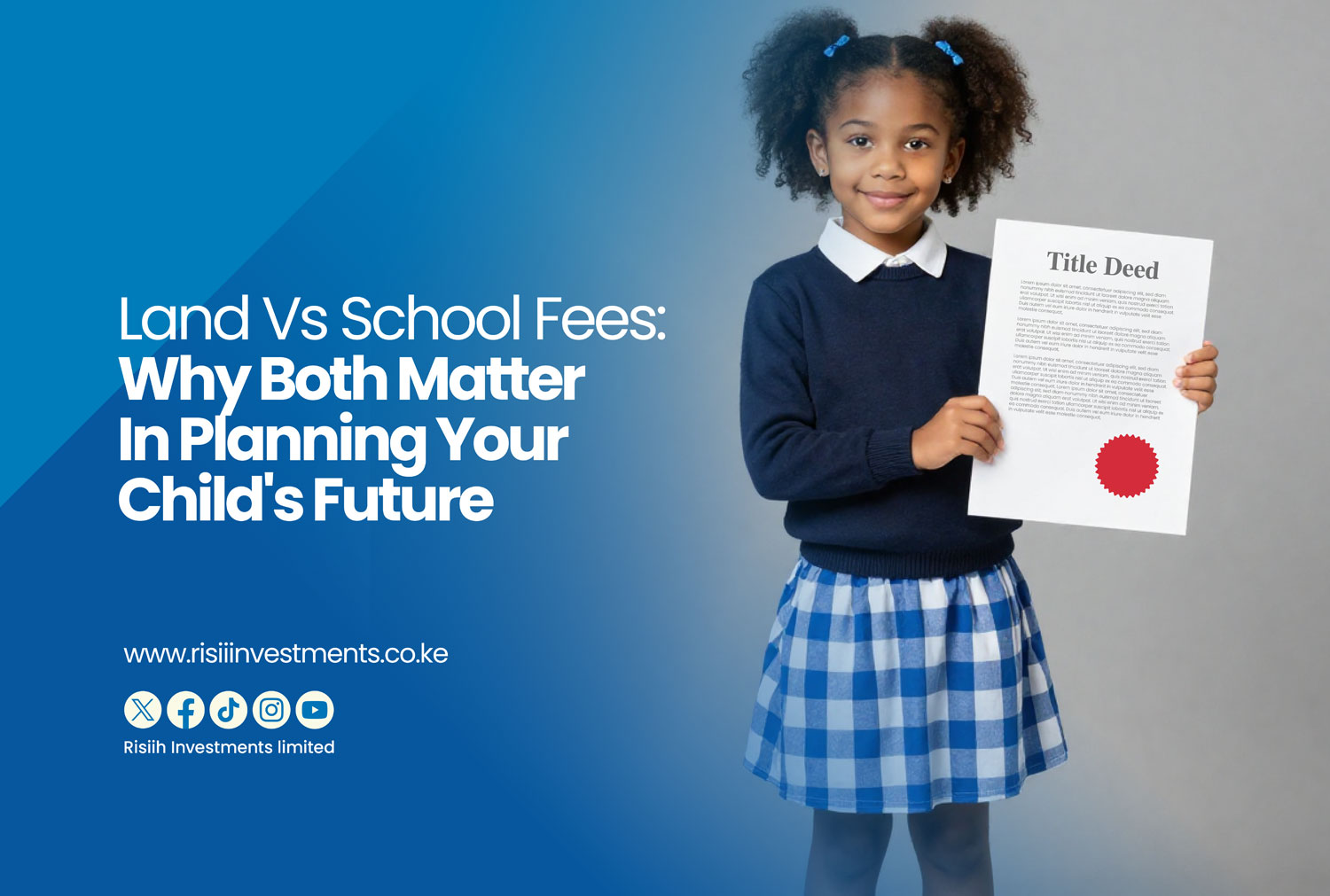

Risper Anyango from Thika came for a site visit carrying a notebook that looked more like an accountant’s ledger than a personal planner.
Every page had numbers. School fees, transport, uniforms, medical cover, savings. In one corner she had written the projected cost of secondary school. A few pages later she had estimated university expenses based on current fees, with a note beside the figure that simply read: “Will definitely be higher.”
She was raising two children and working full time. Like many parents, most of her financial decisions revolved around making sure her children had access to opportunities she never had.
Why Education Dominates the Conversation
When people talk about investing in children, education usually comes first.
And rightly so. Parents sacrifice a great deal to keep their children in good schools. They wake up early, take on additional work, postpone personal goals, and adjust household budgets around term dates. Risper had done all of that.
What she had started questioning was what comes after the fees are paid.
School teaches skills. Education opens doors. Neither automatically creates ownership. That realization pushed her to start looking at land.
The Question She Kept Coming Back To
Her eldest child was eight years old. By the time he finished university, she wanted him to inherit more than certificates and job applications. She wanted him to inherit options.
That word came up repeatedly throughout the day. The ability to build. The ability to sell. The ability to hold. The ability to generate income from something already in his name.
She was not trying to choose between land and education. She was trying to make sure one did not come at the expense of the other.
That distinction matters because many parents frame the conversation incorrectly. Education and asset ownership are not competing priorities. They solve different problems. One helps a child earn. The other helps a child own.
What Plots for Tots Conversations Actually Sound Like
At Risiih Investments, conversations around Plots for Tots increasingly sound like this. Parents arrive with questions about title deeds, payment plans, and ownership structures because they are thinking further ahead than the next school term.
Risper eventually settled on Nanyuki Lanes Phase 3.
The project appealed to her because it offered something practical. The 50×100 plots sit near Maiyan Development, only 2 kilometres from the main road, in an area attracting growing interest from holiday home developers, investors, and people planning future Airbnb projects.
She had no plans to build immediately. What mattered was securing the land while the entry point still worked within her budget. At Ksh 399,000 cash or Ksh 420,000 through flexible installments, she could continue paying school fees while gradually building an asset beside them.
The Story She Shared Over Lunch
During lunch, she talked about her own childhood.
Her parents worked hard to educate her. The education changed her life, helped her build a career, and gave her the means to support her family. Looking back, she wishes someone had secured a small piece of land in her name when she was young, because the value of that decision would have compounded in ways that her education alone could not replicate.
That perspective shaped her decision more than any sales conversation could.
The Plan She Left With
Children grow up quickly. Parents notice it in shoe sizes, school photographs, and conversations that suddenly sound more mature than expected.
The years pass whether a plan exists or not.
Risper left Nanyuki that afternoon having reserved a plot for her child. Her school fee plan remained exactly where it had always been. The difference was that another plan now existed alongside it — one focused on education, the other on ownership.
She believed her children would need both.
