

 RI_admin
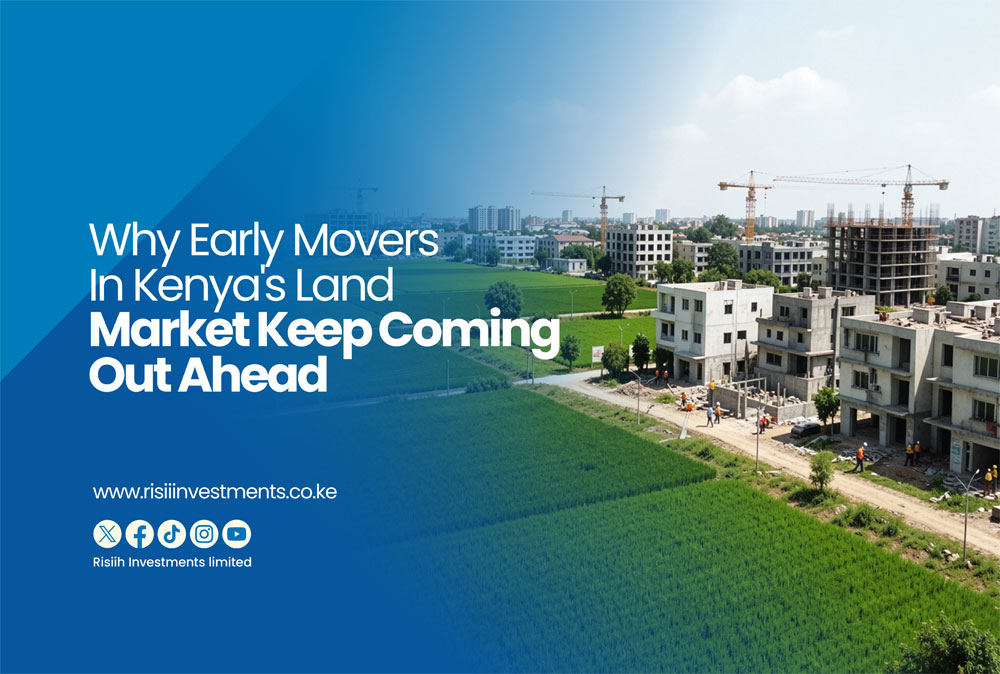
A few years from now, many people will talk about certain parts of Kenya the same way older generations talk about Karen, Syokimau, Kitengela, or Diani today.
They will say land used to be affordable there. They will say they almost bought. They will say they thought they still had time.
Kenya is still in an unusual position. Large sections of affordable land in Kenya across growth corridors remain accessible to ordinary working professionals, first-time investors, diaspora buyers, and young families building long-term security over time. That window does not stay open indefinitely — and the activity already happening on the ground makes that clear.
International capital is already paying attention
Across Kenya, large-scale developments backed by international firms continue expanding into thousands of acres. These are not speculative moves. They are calculated positions taken by investors who understand that the most favorable entry points exist before a market fully matures.
Rendeavour developed Tatu City, a 5,000-acre mixed-use development outside Nairobi that now hosts international schools, industrial parks, logistics companies, and multinational tenants including Heineken, Kärcher, ADvTECH, and CCI Global. These companies are not entering because Kenya has already peaked. They are entering because growth is still unfolding and they want to be positioned before it does.
Konza Technopolis continues attracting international partnerships and institutional investment across thousands of acres, with South Korea already funding part of the Kenya Advanced Institute of Science and Technology project there. At the Coast, Centum Real Estate is expanding the 10,000-acre Vipingo Development with residential, industrial, hospitality, and commercial investment tied to long-term infrastructure growth.
This is what a developing real estate market looks like in real time. Roads expand outward. Developments push further from city centers. Land conversations move into areas people once overlooked — and buyers who moved early find themselves on the right side of that shift.
What mature markets no longer offer
In many developed countries, undeveloped land stopped being part of ordinary financial conversations decades ago. Prime areas were absorbed into mature housing markets, industrial zones, or institutional ownership long before most individual buyers had a chance to participate.
Kenya has not reached that point yet. It still offers something those markets no longer do: room to enter early, at prices that still make sense for working professionals and first-time land buyers in Kenya.
Where that opportunity exists right now
Two areas stand out for buyers looking at affordable land in Kenya with strong long-term fundamentals.
In Nanyuki, demand has been building steadily. Nanyuki Lanes Phase 1 and Phase 2 have already sold out — not through aggressive marketing, but through consistent buyer interest from people who recognized what the area represents. Nanyuki Lanes Phase 3 is now in preparation. The town sits within a growth corridor with expanding infrastructure, strong tourism and weekend getaway demand, and growing interest from diaspora buyers and young professionals looking for land they can develop gradually over time. Buyers can secure a 50×100 plot with a deposit from 50,000 KES and complete payments in flexible installments.
In Malindi, the opportunity is equally compelling. Malindi Blue Haven offers coastal plots for sale in Kenya starting from 150,000 KES — an entry point that makes land ownership accessible to first-time buyers who are still building their financial footing. The area is attracting attention from buyers interested in holiday homes, coastal Airbnb investments, and long-term land holdings in a region that continues to develop.
What ownership actually changes
Once someone buys land in Kenya, future planning becomes more concrete. A plot stops being an abstract idea and starts becoming a real variable in how someone thinks about their life. It becomes a future construction project, a retirement option, a coastal or highland Airbnb, a family asset, or simply a financial position that keeps growing in value while the owner focuses on everything else.
The people positioning themselves now are not necessarily the wealthiest buyers in the room. Many are simply the earliest.
That difference becomes visible years later — and by then, the window they walked through is usually already closed.
